Friday, October 7, 2016

Unseen Terror 2016: Day 6


Still reeling from the loss of his youngest son and a torturous time spent back in Vietnam, postman Jacob Singer has been living a life that is less than adequate. Despite having a PhD and a girlfriend who loves and takes care of him, he is employed at the post office and is separated from his wife and other two children, who he misses dearly. Outside of work, he has been suffering from disturbing hallucinations that shake him to his very core. His delusions continue to worsen over time, which include the repeated appearances of men with constantly moving, blurred faces, and giant lizards presumably donning the disguise of other humans surrounding him. Unsettled and terrified of what he has been seeing, he begins to determine that there may no clear explanation as to why he is going mad. During one afternoon, he receives a call from an old cohort in his troop, who tells Jacob that he is not alone in experiencing these visions. Soon, the veteran shall have to start breaking down the differences between what is truly going on inside of his head, and what is actually a part of the horrifying reality that he lives on a day to day basis.


Ha, see? There ARE still monsters making appearances during this marathon.


In all seriousness, taking a break from a loop of Kaiju flicks was utterly necessary right now, as I felt that I was in need of some good human-based horror again. After hearing of Jacob's Ladder, director Adrian Lyne's (Flashdance, Fatal Attraction) extremely trippy foray into the genre, it actually ended up being the very first picture added to this year's iteration of Unseen Terror. And you know that if I am willing to choose or write anything down before a giant monster movie, I must be serious about seeing it. After all, the idea of everything not being precisely what it seems in the mind of a very small minority has always been a guilty pleasure of mine, and I was feeling desperate to see another good traumatic thriller/horror for the first time in quite a few months.


Jacob's Ladder is a fascinating beast of a different breed. Those who glance at the plot or trailer may be expecting one of several things. Some are foreseeing a more sophisticated, serious version of films akin to John Carpenter's They Live. There also exists the possibility of believing it to be a nice love letter to some of the more bizarre filmmakers from the last forty years, including David Cronenberg (The Brood, Videodrome) and David Lynch (Blue Velvet, Twin Peaks), who always managed to throw in a serious nod to the crazier side of the movie spectrum. Or, there is the easier comparison to once-great giants of the field such as M. Night Shyamalan (The Sixth Sense, Unbreakable). Personally, I would call it a precursor to some of the more respectable, contemporary works outside of the Cineplex, which includes video game titles like Silent Hill and Eternal Darkness, and its influence can be felt throughout theatrical releases that are sometimes argued for NOT being classified as horror, such as American Psycho or Session 9.


Goodness knows, our cast are absolutely treating it like a Grade-A horror flick though. Given Lyne's reputation and prior works in his filmography, seeing that the acting is just stupendous was no surprise. I was legitimately shocked that Tim Robbins (Mystic River, The Shawshank Redemption) and the dearly departed Elizabeth Pena (Rush Hour, The Incredibles) did not receive any sort of nominations (not even a Saturn Award?!) for their work here, especially given how much heart and soul they bare when an opportunity is handed to them. Jacob himself is extremely sympathetic; a quiet, strange individual that mercifully doesn't come across as too much of an introverted oddball, as the audience is assured that you should and will care about the man. Every time that he appears distraught or has another horrifying flashback or morbid vision, you just want to give him a hug, hoping and praying that he ends up safe and sound from whatever is driving him to insanity. Pena, playing his very sensual/caring girlfriend Jezzie, has the uncanny ability to make you both adore and hate her, being blessed with the gift of natural charm and a smile that can draw you in just as well as it did to Jacob himself. Danny Aiello (Do the Right Thing) also pops up as Louis, our titular character's friend/masseuse, who may have a better understanding of what this fuss is all about, but is simultaneously unaware of everything going on inside of Jacob's fractured mind. Despite his peculiar demeanor and sporadic appearances on screen, he is wiser than he lets on, and some of his dialogue is pivotal to the plot of the overall product.


Sure, all of these characters are great, but the dark, dreary world that Jacob's Ladder takes place in is the glue that keeps the package from falling apart. The misery that is spread throughout this version of Brooklyn is horrible enough to rival that of a motion picture such as David Fincher's Se7en. You get the horrible feeling in your stomach that every single aspect of this world is just ready to come undone once things begin to reveal themselves to our protagonist. Even the brief moments of sunshine and happiness are kept to a minimum, with most popping up in flashbacks that precede terrible moments in Jacob's life. Composing legend Maurice Jarre (Lawrence of Arabia, Ghost) also manages to put together some pieces that have the ability to get under your skin, or that border on the tragically beautiful.


Technically, I've only had to sit through six picks so far for this year's list, but even after glancing again at my choices that I selected for first time screenings, I firmly believe that Jacob's Ladder is going to be very hard to top. Its twisted, psychotic, and often depressing vibe helps its two hour running time finish up quicker than you would expect it to. Though the film will certainly not be for everyone who ventures out to watch it, and its final thirty minutes can be a bit on the convoluted side, those with an open mind and a willingness to think/dissect (for even just a bit) should find themselves in for a rather unique, rewarding, and almost symbolic experience. For a rather tiny amount of money, you can order the DVD and Blu-Ray for Jacob's Ladder on Amazon, and can even rent it for a meager price on services such as YouTube and iTunes.


Or, if you are just impatient, and want a most-likely mediocre reimagining from the same person who brought you 2015's The Perfect Guy, there should be one coming within the next year or two. But if you desire such a thing, you may need more professional help than I thought.


Tomorrow, it's time to go back! Back....to the 80s! And for that matter, back....to a New York where hobos melt into toilets!

Wednesday, October 5, 2016

Unseen Terror 2016: Day 5


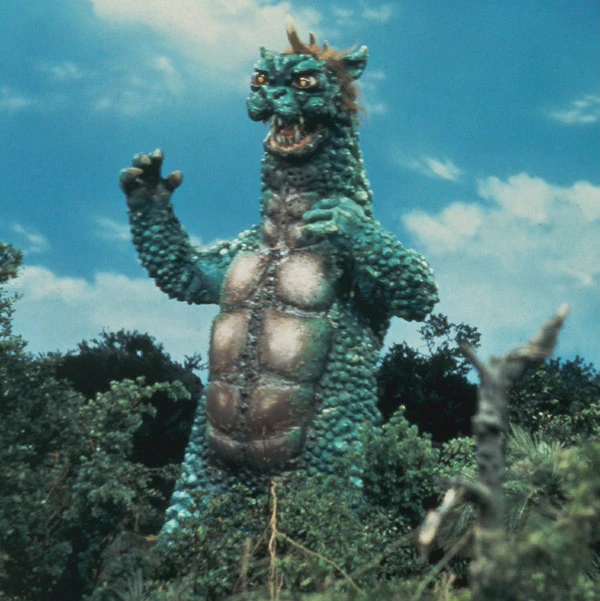
Curious about the reports of a flying saucer being spotted near Mars, a group of Japanese and American explorers set out on a journey into the furthest reaches of space. Once they have arrived, an unknown alien barge sprays the ship with something unidentifiable, which tempts the collective to gather some cells to take back to Earth for studying. After some time has passed, one spore from the sample grows into a colossal creature dubbed "Guilala" that promptly sets out to destroy Tokyo. Frightened and amazed, our resident scientists are now left to ponder about how to properly combat this new threat before the planet is left in ruins.


Well, you can't say that this small portion of Unseen Terror is ending on a high note. Luckily, it isn't going out with a whimper either. The fact of the matter is that the oddly-titled The X from Outer Space (released in its native country as Giant Space Monster Guilala), the first venture into Kaiju Eiga from a very respected veteran film studio, is perhaps one of the strangest, most unique, and indescribably wacky entries into this niche subgenre that has lasted now for more than sixty years. It is regarded as a true "love it or hate it" type of flick. Yet, after finishing it for day five of Unseen Terror, I am still not fully convinced that I know where I stand on it.


The longest running distributor and producers of Japanese cinema (their history runs back to the late 1800s), Shochiku decided that it would be better late than never to jump right into the "Giant Monster" field that seemed to be a big hit with audiences spread across the globe. After all, these films didn't cost the most amount of money to get off the ground and complete (save for specific ones like Destroy All Monsters), and the monster didn't need to look revolutionary so long as you just had it wrecking everything in sight. In those aspects, The X from Outer Space simultaneously knocks it out of the park and stumbles immensely. The technical and artistic side of things are certainly not up to the standards set by long gone geniuses such Eiji Tsuburaya, nor is Guilala a revolutionary addition to the Kaiju mythos. For crying out loud, most of his design resembles that of a rejected Super Sentai villain crossed with a rubber chicken (can't argue with The Golden Turkey Awards for pointing out the latter's similarity years ago), and his roars of anger sound akin to an overgrown, wailing baby. Like Godzilla, he's also attracted to nuclear energy, consuming it to help fuel his wrath. And yet, whenever he decides to feast, it honestly appeared as though he may have been taking a dump.


The score that precedes his first appearance and permeates throughout isn't helping matters either. The X from Outer Space boasts one of the most bizarre, ill-fitting soundtracks that I have been a witness to in some time. You can hear faint hints of jazz and lounge music any time that the main characters are flying their ship or traveling from one location to the other, and if you had told me that any particular piece would go on to reappear in some sort of pornographic series based in another country, I would have not been surprised whatsoever. It's a far cry from the bombastic and grandiose songs composed by the (now) legendary Akira Ifukube. Oddly enough, some of the more normal features that stand out come from the cast of humans. Supporting actress Peggy Neal, one of several Americans chosen to be in this production, is the most interesting or developed of the characters. Mind you, she doesn't have anything that puts her in the same league as some of the genre's more memorable leading women (Kumi Mizuno and Yuriko Hoshi), but she at least seems to be fully on board with the project. I can not say the same for her fellow Western costars though, as some of their acting further helps proves my theory that save for people such as Nick Adams (Invasion of Astro Monster) and Don Frye (Godzilla: Final Wars), most Caucasian performers that sign on to star in Japanese movies end up being one of, if not THE very worst parts of them.


Before I summarize my thoughts overall, I feel that I should mention something in regards to yesterday's picture Gappa: it was originally conceptualized as a parody of the entire genre, but was eventually reimagined as a straight-forward movie instead. Fascinatingly enough, this appears to be the opposite case for Guilala's first foray into the field. And no, I did not stutter. Over forty years later, he would actually resurface in the aptly-titled The Monster X Strikes Back/Attack the G8 Summit, which IS apparently treated as a sendup of kaiju and tokusatsu treats alike. The best compliment, and coincidentally the best description that you can give The X from Outer Space is that it is a weird, flawed experiment that stands out in the admittedly overcrowded period of the Kaiju boom that was at its peak in the second half of the 1960s (this predated the release of aforementioned entry Gappa by less than a whole month). It is the definition of a "get a hold of something strong and watch with your friends" kind of film. Any sort of addition, be it related to friends or beverages, may just help you get through some of the slower parts without nearly falling asleep (our antagonist doesn't pop up on screen until the forty-six minute mark). If you are of the variety that needs to see any and every flick that stars grown men in gimmicked rubber suits crushing toys beneath their feet, The X from Outer Space can be viewed for free on YouTube, and is available on DVD via Criterion.


No, you did not read that last sentence incorrectly. In 2007, the revered home video company launched Eclipse, which was conceived to help cover and promote the more obscure and arguably seldom-wanted releases that were desired by perhaps a very niche audience. This version also includes the original Japanese audio and liner notes that presumably just consist of the word "WHY" being used repeatedly for several paragraphs. It's especially amusing that X is packaged in a set dubbed "When Horror Came to Shochiku," as it is the only movie in the collection that appears to be anything but frightening and is more in line with C-level science fiction and fantasy.


Then again, maybe you ARE scared of giant, scaly chicken men and just don't know it yet.


Tomorrow, the monsters are thankfully going back into hibernation for a little while, as we need a break to come back to reality. But with the 1990 entry that is coming up, can we be so sure as to what is real and what is not?

Tuesday, October 4, 2016

Unseen Terror 2016: Day 4


A small group of scientists are on their way to the mysterious Obelisk Island, which has been eyed as a future tourist resort by one Mr. Funazu, owner of the successful "Playmate Magazine." Upon arrival, the collective is greeted with love and respect by the area's natives, though one of the youngest, a boy named Saki, warns members of the crew to stay away from one forbidden area of the land. After doing some digging around, two men stumble into a cavern and happen upon a rather unusual discovery: a giant egg, which a large unknown animal hatches from shortly afterwards. Though Saki and the islanders beg for the scientists to just leave this discovery alone and let it reside in peace, they still insist on taking it back to Japan for show and for studying. Unsurprisingly, the baby's parents rise from the waters beneath the island's volcano, destroying anything in their path in the pursuit of saving their child from the hands of curious experimenters and power-hungry businessmen.


Story time (yet again): my history with Japan's Gappa: The Triphibian Monster, a one-off picture from a company that had never previously experimented with giant monster movies, comes not from perusing message boards, nor from friends or cohorts who would recommend it to me if I had nothing better to do. No, the first mentioning I had noticed came from Michael Medved's second book in his now-defunct series titled "The Golden Turkey Awards," which highlighted the best of the worst in cinema before websites such as CollegeHumor and YouTube made it easier for you to determine and search out such a thing. They had specific categories set up to single out special absurd moments of particular pictures, such as "Worst Rodent Movie," which would go to Food of the Gods, or "Worst Casting" for John Wayne as Genghis Khan (yikes). They were never necessarily kind to flicks that you categorize as Kaiju Eiga, but it never bothered me as I knew that I enjoyed these pictures, and in the end, that was what truly mattered.


So, the screenshots and brief descriptions of Gappa, which would be released straight to television in the U.S. rather than to theaters (and was renamed in some circles as Monster From a Prehistoric Planet), made it out to look like the bottom of the barrel when it came to this type of stuff. After sitting through the movie, however, I feel as if some of this bashing was slightly unwarranted, though not without some sort of merit or reasoning. Yes, there are some downright cringe-inducing moments to be found throughout, but given that I have sat through a rather large assortment of films in this subgenre (including some with significantly larger budgets), it is far more watchable than it has any right to be.


Right off the bat, the first thing that I noticed about Gappa was its eerie similarities to other creature features released during the same decade. The plot is essentially plagiarized from previous Unseen Terror entry Gorgo. with the concept of an infant monster being stolen by foolish/greedy humans, which in turn leads to the parent(s) coming to annihilate anything in their path so that they may finally get their child back to them safe and sound. The concept of the monsters not being fully evil, as well as the island natives worshipping the behemoth as some sort of deity, is also taken from the original version of Mothra. You can't convince me that all of this was coincidental, as both of those projects were released six years prior during the first half of 1961, and were relatively big hits commercially and critically. Still, in the case of the former, you'll have to trust me when I say that it is so incredibly strange to see any Japanese studio rip off someone else for a change.


That studio in question deserves some mentioning as well. I suppose that the Nikkatsu Corporation was hoping that this would receive the same levels of success and love as Godzilla or Daei's own rival monster Gamera, but seeing as this was their sole entry into the field of "man in a rubber suit runs amok," I would say that in that aspect, they failed. They would sort of rebound by going on to produce, promote, and distribute a large portion of pornographic films, which has a certain demand in their native country given how strict they can be with subjects relating to sex or drugs. Bizarre as it may have been, it did help keep the company afloat until they were forced to declare bankruptcy in 1993 (three years later, some of their shares would be temporarily acquired by Namco). The efforts put forth are commendable though. The monster effects are done and headed by Akira Watanabe, a former employee of Toho, who helps craft some fun fight sequences with the military. None of it is likely to blow you away, but considering that Gappa's budget was most likely very small, they are fairly decent. They are entertaining enough to almost make you forget about the look chosen for the Gappas themselves.


Speaking of that, let's talk about the design for our titular beast(s), and to an extent, their much, much tinier adversaries. Perhaps in concept, they were hoping for something a little similar to Daei Studios' villainous creation Gyaos or to Toho's iconic Rodan, but what they ended up with was a trio of creatures that are akin in look and sound to that of, well, a giant parrot mixed with one of Toho's more mediocre creations called Gabara. Then again, Gappa actually predates All Monsters Attack/Godzilla's Revenge by two years, so maybe who influenced who is actually up for debate. They are quite expressive-looking bird/lizard/whatchamafucks, and the suits' abilities and facial animations get the chance to show off a bit during the final fifteen minutes of the movie. The human protagonists are actually fairly fun, if not a bit clichéd (minus one shipmate, who was voiced to sound like someone in a Three Stooges tribute act). I'm not sure about how much of that influence in the writing came from the states or from Japan, but it's a nice bonus considering how boring or offensive the past few entries' human casts have been.


Absurdity and an unabashed interest in the sillier side of these movies plays a great part in why I enjoyed this far more than I thought I would have (though anything would have been an improvement over yesterday's choice for the blog). I don't fully believe that Gappa is an essential Kaiju flick, but it is nowhere near as terrible as some historians have made it out to be. It makes for a breezy viewing experience, and with the right company or added substances (not that I would ever encourage that. *wink wink nudge nudge*), it can provide you with an adequate amount of entertainment. Hell, I'm amazed that Gappa never made its way into the realm of Mystery Science Theater 3000, as the hilariously bad dubbing alone is just ripe for riffing. Given that the picture is floating around in the public domain, obtaining a copy of this one should not be difficult to do at all. Alpha Video has a DVD release out that can be purchased for pocket change, and Mill Creek Entertainment has distributed it multiple times throughout the years as part of their well-known package deals. To my pleasant surprise, Tokyo Shock also managed to put the film out on DVD several years ago, which included liner notes and the original Japanese language track.


But, if you think that I'm paying a whopping thirty-five dollars for a motion picture that also features a young Japanese boy running around in what could be constituted as blackface, you would be mistaken.


I would only pay thirty-four for that.


Tomorrow, my concern that this Kaiju boom will crash and burn may be fully realized. And for the first/last time, we venture forward into outer space for the final entry in the block. God(zilla) help me...

Monday, October 3, 2016

Unseen Terror 2016: Day 3


Commander James Bradley, a no-nonsense military scientist stationed on Japan's Kunashiroshima Island, has been conducting a series of experiments consisting of desalinizing the surrounding waters. His worrisome wife Anna tells him that these processes are causing the island natives great stress, but he begins to think of ways to negotiate with the villagers so that he may continue. After the testing begins, they awaken a fearful and frightful "obake" nicknamed Varan, who many of the residents worship and consider to be a deity of the lake. To the surprise of nobody, the beast goes berserk, beginning to lay waste to everything in its path, while humanity attempts to concoct different ways in which to stop him.


In recent months, I have tried my absolute best to refrain from using strong language on this blog, as there is always the chance that an employer or family member may be popping in to read one of these reviews that I type up every so often. Mind you, the occasional curse word still slips out from time to time, and given the amount of bad movies that occasionally stumble into the Unseen Terror pile, it seems inevitable. After all, do you realize how hard it is to summarize one's thoughts on a movie like Don't Go In The Woods or Pinocchio's Revenge without using the terms "fucking" and "awful" in the same sentence? It is perhaps the hardest thing that I have to deal with during these long marathons.


But, when it comes to a picture such as Varan The Unbelievable, there is no way to mince words. It is a colossal piece of dried-up shit. As I have touched upon in previous entries, I do not always have a particular fondness for when American film studios thoroughly butcher something that comes over to the states. In the case of Daikaiju Baran, one of the first non-Godzilla related monster movies to come from Japan's Toho Co. and the final one to be shot and released in black & white, it was acquired four years after its initial release by the independent company known as Crown International Pictures, who are more renowned for releasing an assortment of "B" movies, including the Ed Wood-written Orgy of the Dead and The Beast of Yuca Flats. Come to think of it, "butchering" may not even be the most appropriate term to use when it comes to CIP's handling of Varan. Because while it is highly likely that both iterations of the final product are still silly overall (this was my first viewing of either edition), the Americanized flick looks and feels like it was horrendously gutted, as a humongous amount of the original release has either been erased or replaced by a plethora of scenes created solely because they were afraid of audiences being turned off by a cast led by non-white actors. The mostly new cast is led by Myron Healey, who was known primarily for his work in Western-themed television shows during the 1950s and 1960s. He is fully aware that he is starring in a release geared towards a certain market, but his exposition-heavy dialogue and wannabe noir narrations are the furthest thing from this film's problems.


Most of that lies in just how disrespectful this new cut feels not just to the original Japanese cast and crew, but to the people of the country altogether. Well-loved composer Akira Ifukube created some very memorable pieces for the production, with one in particular being reused and retooled in other Toho pictures throughout the years because of how powerful and effectively moody it is. So then, why did they feel the need to disregard a majority of the score and hire Albert Glasser to do a new, inadequate one? I mean, Varan is far from world-class material, but at least the former tried his damnedest, no matter how weak the entry ended up being. Anna, the Japanese wife of the aforementioned Healey and another added feature to the CIP version of the flick, is portrayed as a physically and mentally weak human being whose sole reason for existing is to act as a vagina and nothing more. While it is true that other entries in the realm of Kaiju Eiga were also guilty of not being the kindest to women (try watching Showa-era Gamera films and argue with me about this), it still feels like a big step down from other studios' managing of previous Toho efforts such as Godzilla, King of the Monsters! Worse yet, all segments involving the actual people of Japan's plights and panics dealing with Varan are either muted or flat-out not translated whatsoever. So, every time that there is a soldier on screen talking with his superior, a citizen expressing their ideas on how to deal with the monster, or anything else that you can tell was fairly interesting, they just subtitle it with "(Foreign Language)." I suppose that they are of the belief that most moviegoers in the early 60s were illiterate or xenophobic. The titular antagonist's unique roar, which would be recycled and remixed for other Toho creations such as Megalon, Baragon, and Gorosaurus, is dubbed over in place of something that sounds similar to the rumbling of a dog with an upset stomach. Various scenes involving the beast's rampages or display of abilities were also removed for the sake of time and the hope that he would look more menacing to the general public. Yes, Varan does somewhat resemble a mutated hybrid of a lizard and a flying squirrel, but why would you decide to edit out footage of the destructive behemoth in a GIANT MONSTER MOVIE? Shit, that's like cutting out scenes of the Joker in Suicide Sq---oh, wait.


All of my legitimate complaints aside, it still feels so unfair to give Varan the Unbelievable any sort of proper critiquing, as this barely resembles anything of the original Ishiro Honda-led project. Earlier in the picture, Healey's character of James Bradley utters the line "They might get a better story if they stay closer to the source material," and I couldn't have summarized this shockingly short seventy-minute-long feature any better even if I had an English professor peeking over my shoulder once every five minutes. Perhaps this often forgotten entry in the world of Kaiju Eiga will warrant another viewing in the future, and hopefully I will be able to track down a print of the original cut that aired in its native Japan. If you are into astonishingly bad edits of pictures from the east, Varan the Unbelievable is available for free streaming on Amazon Prime, and a home release of its source material, Giant Monster Varan, was distributed by Tokyo Shock and goes for more than a pretty penny on most online shopping services these days.


Still, it's highly unlikely that any print would be able to fix that silly design for the flying mode of the monster himself . Oooooooooooooooooof..


Tomorrow, Nikkatsu studios decides to get involved with this supposed "kaiju boom" that seems to be the rage with all the kids, but will their cinematic release rise like the phoenix, or crash and burn like a turkey jumping off of a cliff?

Sunday, October 2, 2016

Unseen Terror 2016: Day 2


In feudal Korea, several groups of peasants live in fear of a greedy king, who seems to benefit from starving residents while taking all metallic goods and tools from them in the hopes that it can help expand his own army. During one particular conflict, a young man named Inde is captured and sent to jail, where he sees that his future father-in-law, a well-respected blacksmith named Takse, has also been imprisoned due to resisting these requirements. Over the course of several weeks, the elder becomes ill, and as he draws his final breath, he crafts a small figure made from rice and clay, beseeching that someone or something will listen to his pleas to save the village from this tyrannical, ruthless madman. It doesn't take long, however, for his requests to be realized. The next day, his creation has sprung to life. The miniature monster, nicknamed "Pulgasari" by the villagers, has a knack for eating anything containing iron, and seems to grow in size after he has devoured enough. With this observation, the offspring of the now-deceased older man believe that this new arrival can be used to benefit the greater good, and along with other disgruntled, nearby villages, they can now crush the oppressive dictator.


To those with an open and keen eye, South Korea has certainly been anything but strangers to the realm of oddball cinema. In addition to releasing some stupendously excellent flicks in the fields of horror, action, and thrillers, they have taken a dip into the realm of monster movies on more than a few occasions (2006's The Host is a tremendous piece of work, and even the 1999 remake of their own Yongarry is decently entertaining). While some did ultimately wield mixed results, most of these aforementioned releases have certainly managed to catch the attention of those seeking out something from this subgenre beyond the walls of its countries of origin. Seemingly jealous, and praying to not be outdone, their brethren in North Korea were desperately hoping to reignite the film industry in their own part of the peninsula. So, in 1978, under the orders of the infamous Kim Jong-il, they decided to begin the slow attempt at building interest in North Korean cinema in the most logical way possible: they kidnapped famed South Korean director Shin Sang-ok and his wife/lead actress Choi Eun-hee, forcing the two to create and star in multiple motion pictures for the purpose of spreading both entertainment and propaganda.


As it turns out, Kim was a humongous fan of motion pictures. Before his demise in 2011, he was reported to have owned a movie collection that contained upwards of twenty thousand VHS tapes and DVDs. Still, I would bet money that he didn't usurp the amount owned by some particular friends of mine that currently reside in Wilmington! As the concoction for Pulgasari may tell you, he was also a rather big fan of the Gojira franchise. Of course, the irony of a nutjob such as him loving something that was quite staunchly anti-war and anti-nuclear weapons is just hilarious, but I digress.


To the shock of absolutely no one, Pulgasari feels like a mixture of political commentary and a low-rent knockoff of smaller Kaiju Eiga pictures (the similarities to Japanese production Daimajin are uncanny). There is a not-so-subtle attack on capitalism that can go over the heads of the youngest and most ignorant of viewers, but there is a good chance that the ideas of anti-communism and dictator bashing that pop up towards the final act can not be so easily ignored. Unfortunately, the abundance of our wailing, moaning, and mundane humans could make it rather difficult for them to even pay attention to these messages. While I can understand those who criticized the 2014 iteration of Godzilla for its weaker, non-kaiju protagonists or occasional lack of creature presence (even though the Big G himself only appears in his 1954 debut for approximately seventeen minutes), I could not tell you a single distinguishing characteristic about any of these individuals, with something as simple and vital as their own names seeming to be insignificant in the long run. Mind you, it has only been a mere twelve hours since I finished today's entry, so that is saying a lot.


Oh, and in terms of our titular character, he is far from the worst behemoth that I have seen on the big screen (the one to bear that mark of shame will appear in a later review), but he is not exactly something to write home about either. Pulgasari's facial features are certainly expressive, with its eyes and mouth operating much more efficiently than it has any right to. It is arguably the best part about the costume, and a highlight of the entire ninety-five minute-long experience. That is where the praise ceases though, as the overall final design just seems to be frankly lazy in most areas. When he is pint-sized, he behaves more like a poor man's version of a Mogwai or E.T., which was very likely done in the hope that it would entice children into venturing out to whatever Cineplex was nearby, which could in turn lead to a gaggle of merchandise being manufactured for the general populace to purchase. That, or veteran suit actor Kenpachiro Satsuma (yes, the same one mentioned yesterday) just decided to do whatever the hell he wanted to during production. He looks akin to a very strung-out combination of an Ultraman villain, a brown bear, a boar, and someone you see at a Kid Rock concert (go ahead, make a "Manbearpig" joke while you're at it). He looks like a meth-head minotaur who has been sitting out in the sun for too long. Sadly, he doesn't even have abilities beyond being able to grow exponentially larger after consuming enough iron. And man, you should have seen my face after one of the villagers exclaimed "It even ate my pot!"


*When you realize that Yongarry and even Guilala will receive sequels before you do*


The only way to possibly recommend something such as Pulgasari is to suggest that you view it as anything other than a kaiju movie. The action featuring the colossal creature is sparse, the score is pathetic, and the plot is filled with far too much happenstance. As luck would have it, when you are facing down a gargantuan threat during the years of the Goryeo Dynasty, you don't have to do much worrying, as there are a good number of mystical people and plot devices around to potentially stop or combat the monster. Even worse is the occasionally sluggish pieces scattered throughout, and had it not been for Satsuma's portrayal of Pulgasari himself along with the involvement of Toho Studios in the special effects department (spearheaded by their own Teruyoshi Nakano), I would have turned it off halfway through. And yet, when you factor in the sheer insanity that went into its creation and sole reason for existing, it is a fascinatingly bad film to view. As of now, the only way that one can properly attain a copy of this failed experiment is to buy it on the bootleg market, as it is highly unlikely that something such as Pulgasari will ever find its way into what video stores are left around the globe. Thankfully, it IS available for you to watch on the wonderfully weird cesspool known as YouTube. Oddly enough, there is also a documentary out there to rent titled The Lovers and the Despot, which chronicles the shocking story behind the capture of, and efforts from the couple during their forced tenure working under the orders of the North Korean government.


Oh, and what reward did director Shin Sang-ok receive when he and his wife were able to escape from the clutches of the evil Kim Jong-il and his own father Kim Il-sung? Well, they dipped out during a film festival in Vienna, Austria, managing to make their way over to the United States, and living secretly among the town of Reston, Virginia while being protected by American authorities. Then, when he felt comfortable enough to make a foray back into cinema, he made the following motion picture.


Well.....I guess that could be considered failing upwards?


Tomorrow, it's back to the land of the rising sun! This time, the titular foe is a bit........unbelievable!

Saturday, October 1, 2016

Unseen Terror 2016: Day 1

Well, isn't this a sight for sore eyes! Much like a particular professional wrestling company that refuses to die (without giving away too many hints, they begin with "T" and end with "A"), Unseen Terror has returned from the grave for its seventh year on this funny little thing that I seem to call a blog. If you are unfamiliar with this whole ordeal or concept, I will provide you with a very brief explanation. Back in 2010, in between time spent looking for employment and just trying to keep my sanity intact, I decided to "up" my horror and science fiction movie game. Thus, I figured that a good way to kill several hours would be to view at least one new motion picture a day, and write about it immediately after it had concluded. Of course, this can only include movies that I have never seen before (though that rule has been broken on a couple of occasions with pictures like Rodan and Martyrs), as typing about well-known classics such as The Thing and Evil Dead 2 just seems unnecessary at this point. And besides, why not partake in occasionally unearthing a hidden gem or two? I believe that acting defiant or hesitant towards finding new favorite films seems wholly illogical and just plain silly.


Anyways, let us dive in, shall we? If this year was a massive milestone for me in my personal life, then I find it only fitting to begin with one of the most awe-inspiring figures in the realm of monster-centric cinema.


Reporter Goro Maki is sailing near Daikoku Island, which has recently seen its fair share of volcanic activity. He suddenly comes across a fishing vessel, the Yahata-Maru, and after stopping to explore the boat, sees that nearly every person on board has died. Suddenly, he is attacked by an unusually large sea louse, but is saved by crew member Hiroshi Okumura, who despite suffering wounds from fighting with this mutation, survived his encounter. While Okumura is hospitalized in Tokyo, Maki questions the man about what exactly happened on board. He claims that during a rough storm one evening, he saw a monster emerge from the Island, and that the enlarged copepod which killed his friends must have come off of what startled him so badly. After looking through a series of photographs and hearing stories of a Russian submarine being destroyed by seemingly unknown forces, the fisherman and journalist conclude that something has occurred that the rest of the world prayed would never happen: Godzilla, an immense, walking, breathing reminder of the atomic nightmare, has returned. In a world that features two nations on the verge of waging war with one another, what actions can be taken to halt this unstoppable presence? And for that matter, at what cost?


Despite what you may be thinking right now, I have not seen every single entry in the oh-so-beloved and adored Godzilla film series. Well, not in their intended or original formats anyway. If I can be allowed to cheat right off the bat, my viewing of 1984's The Return of Godzilla was, by definition, not the first time that I partook in such a thing. In fact, if you would be so kind and appreciative, let me rewind the clock for you.


During my childhood, there was a local VHS store in Wheaton, MD whose name I unfortunately can not recall. Though they were eventually bought out and turned into a Blockbuster Video, both establishments (along with THIS previously discussed tape) served as a stomping ground for me being able to catch my first glimpses into the wonderful world of Kaiju Eiga (roughly translated to "giant monster movie"). Over a good number of years, I managed to convince my parents to rent nearly anything and everything starring gigantic creatures battling either a battalion of resistance and/or another beast of equal-sized proportions. One of these efforts was the fairly self-explanatory Godzilla 1985, which happened to be the American edit of the film whose poster and synopsis you glanced at a moment ago. Despite the video cassette copy of the flick opening with an amusing animated short titled Bambi Meets Godzilla (which can be viewed here), I remembered virtually nothing about the actual motion picture itself. Sadly, it appears as though Godzilla 1985 may forever be stuck in the realm of VHS traders and buyers, as legal reasons such as the sampling of scores from Christopher Young (Hellraiser, Drag Me to Hell) and the original stateside distributor (New World Pictures) going the way of the dodo, have prevented it from ever seeing release on a disc of any kind in the West.


Yet in 2016, Kraken Releasing, who have helmed the Blu-Ray releases of several other Toho projects during previous years, somehow managed to scoop up the rights to the original, theatrical cut for The Return of Godzilla. To an unabashed geek such as myself, this was our equivalent to Chinese Democracy finally being released to the general public. Yes, it was depressing to hear that only ONE cut of this forgotten entry would be available for us fans to finally own again, but it was still shockingly exciting news, especially since I have grown and gained a great deal of respect for the original Japanese language audio. So, now that I have finished their decent-looking Blu-Ray of Return, what were my thoughts overall?


If you are going by "giant monster movie" standards, this particular picture doesn't do much to differentiate itself from the rest of the pack. Godzilla attacks buildings, fights tanks and fighter jets, picks up trains and discards them like a toddler who tires of his old toys (which felt like an homage to this film's thirty-year-old predecessor), and breathes his trademark atomic breath on the poor suckers who aren't smart or quick enough to run as far away as possible. Even his origin is just the same as it was in his original heyday, though Return disregards every other entry's existence save for the debut flick from 1954. Hell, the backstory on how Toho Studios tried several times to revive the King of the Monsters during his ten year hiatus from cinema could have made for a far more interesting final product. Some of these included American producer Henry G. Saperstein's idea of pitting the Big G against a variation of one of the titular creatures from Toho cult favorite (and previous Unseen Terror entry) War of the Gargantuas. When that fizzled out, Toho decided to remake the original film, only with Jun Fukuda (Godzilla vs. Mechagodzilla, Godzilla vs. Gigan) sitting in the director's chair, rather than the more well-known and respected Ishiro Honda, who opted out of directing this revival due to his commitment on several Akira Kurosawa projects. Finally, it was decided that were the decision made to have Godzilla resurface on the big screen, he would face off with a larger threat, and it would be against a previously unseen force simply called "The Asuka Fortress." Though not much is known beyond that project's title, the image of a gigantic version of the NXT women's champion facing off against a radioactive dinosaur could make for silly fun in this day and age. And yet, when THAT didn't take off, the final idea presented was to have a newer entity, a sort of "combiner" kaiju that went by the name of Bagan, take him on. Suffice to say, none of these ended up going beyond the developmental and pre-production stages, and the latter monstrosity in particular has garnered himself quite a bit of fame over the decades as perhaps the most beloved unused Toho creature of all time, making appearances only in the realm of video games such as Super Godzilla and Godzilla Movie Studio Tour. I mean come on, the poor guy couldn't even make it into a Mothra-centric release!


"CAN ANYBODY FIND ME SOMEBODY TO LO-er, FIGHT?!"


The human cast is unfortunately hit or miss (Keiju Kobayashi as Japan's Prime Minister is arguably Return's best character), and even coming from someone who watches television programs such as The Walking Dead, I felt that I was being smothered by the amount of new people that were inserted into the plot throughout its decently-long running time (and with pro wrestling-style introductory captions popping up during said debuts). The motion picture boasts a rather impressive composition from the relatively unknown Reijiro Koroku, who does an adequate job of filling the legendary Akira Ifukube's shoes for the time being, as the veteran refused to return for a newer entry because he felt dissatisfied by the decision to increase Godzilla's size during his hibernation (a choice that was inevitable due to Tokyo's skyline growing that much larger over the course of ten years), and didn't want to write scores for "eighty-meter monsters." Luckily, the aforementioned replacement manages to conjure up pieces that are equal parts grandiose and quietly morbid. It is one of the more underrated aspects about a release that some will be catching just so they may see the spectacle of it all. And for those who will feel the opposite way about this or are offended by the man's absence: Akira-san returned to the franchise only seven years later. Leave your stupid comment in your pocket.


Some of what makes this particular film shine is also what hurts it in the end. While the overall design of this iteration of Godzilla, the first of the "Heisei" period, doesn't look terrible per se, there are a good number of close-up and "mug" shots that look almost comical. Yes, he looks pretty menacing when viewed from the side, and the decision to add tiny ears and sharper-looking teeth don't really hurt the aesthetic and overall presentation of the kaiju, a decent portion of the criticism stems from Toho's decision to construct a sixteen-foot robotic version of our colossal antagonist in addition to using the tried and true technique of having an actor parade around in a rubber suit (in this case, Gigan actor Kenpachiro Satsuma). Despite it costing nearly half a million dollars, there are times where it often looks and feels far too unrealistic (well, for this type of picture) for the viewer to feel threatened or frightened. Thankfully, the traditional portrayal of the titular creature in The Return of Godzilla makes up for these occasionally odd technical choices by having him act as mean as he possibly can. There are multiple scenes of the radioactive behemoth coming dangerously close to the civilians fleeing or hiding from him, and in several instances, his own path of destruction is demonstrated by scenes of innocents being crushed by rubble or even running around engulfed in flame. The only thing missing was a choir of girls singing out of fear and despair like in the original Gojira, but it's a minor complaint. He is a mean, primal, and occasionally simplistic animal that, simply put, can not be stopped or reasoned with, and by God(zilla), sometimes that is all that we fans need; a walking symbol of the reminders and horrors of nuclear warfare.


The Return of Godzilla does stumble in a few areas, and most of that is due to being a victim of having a smaller budget and the evolution of special effects work throughout the thirty-plus years since its initial release. However, the battles with the military and the spiffy Super X, a self-described "flying fortress" with cadmium missiles and special armor, are other highlights that are fine enough to make you forget about the occasionally confusing amount of human characters. The cold war tension, despite feeling a little dated, is actually handled fairly well and maturely as well, although I wish they had hired somebody without Grade Z-level acting to play the representative for the United States during his two moments on screen. It is certainly flawed, but even the weaker entries in this sixty-two yearlong franchise have a handful of good parts to them (yes, even Godzilla's Revenge). If you're a fan that ranges from "casual" to "obsessive," then I can't see a reason why you shouldn't finally add this one to your own personal collection. For the time being, The Return of Godzilla can be purchased via most online shopping services, and during the time that you are reading this, there is a strong chance that you can grab it for a meager ten dollars on Amazon like I did.


Or, you can grab several dozen hardcover books to read while you wait for 1985 to finally be released. Your loss.


Tomorrow, those darn monsters are sticking around and still causing trouble for the general populace, but this time, they're invading North Korea...

Tuesday, September 6, 2016

Yoga Hosers (2016) Movie Review


Colleen C. and Colleen M., two best friends who spent most of their time being stuck at school or staying glued to their cellular phones, are begrudgingly stuck working during a boring, mundane evening at the Eh-2-Zed, which happens to be a convenience store located in Manitoba, Canada. Their store manager has run off for the weekend, which is all the more coincidental considering that one of the adolescents' parents is with her. Disgruntled, but not discouraged, the young women call up two male familiars, inviting them to their place of employment in the hopes that they can still party and have something that constitutes as fun. After the men arrive, an old evil begins to resurface, terrorizing our heroines. This particular menace? Nazi sausages that kill their victims by entering through their colons, all while shouting nonsensical German gibberish. The girls slowly unravel the origin behind these miniature threats, and it will remind them that paying attention in history class sometimes has benefits after all.


Story time:


When I was a relatively immature and underdeveloped young man, I had a rather questionable taste in cinema (there is a debate that I still bear this at the age of thirty). In particular, my main attraction seemed to be to flicks of, well, lesser quality. I'm comfortable enough at this stage in my life to confess that I willingly saw dreck such as Tomcats, Almost Heroes, and The Animal in theaters. However, my exposure to the works of Kevin Smith, an independent mind from a small town in New Jersey, changed that. He proved that a large budget and array of highly paid actors were not pivotal to a film's quality. Sure, there was an absurd of vulgarity to be found in his screenplays, and you could probably lose count with how many times his most famous creations uttered words that would make your parents grimace, but there was still a clever and surprisingly intelligent edge to them that could charm nearly anybody with a working brain. He was speaking for the little guy (figuratively speaking), the geeks, and the oddballs.


Fast forward to 2016, and the man who I always assumed was critic-proof is anything but these days. Beginning with 2010's fairly abysmal Cop Out, his critical accolades have been diminishing over the seeming lack of effort and divisive writing in most of his recent projects. While I admit that yes, I have been fairly confused and disappointed by these pictures myself, I still respect his commitment to essentially saying that he is going to do what most truly great directors do, which is delve into whatever territory that they wish to, and without the pestering of big Hollywood studios or disgruntled performers being able to interfere with their vision. Given Smith's previous output in the previous two decades, including beloved independent classics such as Clerks and Chasing Amy (two films that I would be more than happy to put onto my own personal top 100 list, should the demand for that ever come about), I'd say that he's earned every right to make a picture such as Yoga Hosers, his third foray into the realm of horror, and second into its mostly-beloved offshoot that is branded as horror-comedy.


Likewise, as someone who paid their hard-earned money to see the writer and director's newest cinematic release, I feel that I have earned the right to say that Yoga Hosers is a gigantic, ugly pile of clutter masquerading as a motion picture, and could serve as the final straw for those who have been struggling to defend Smith's weakest output over the years. However, there is no plausible way to dismiss the cynics this time around. With all of its way-too-obvious flaws being thrown right out into the open, it almost seems like it's mocking you for making the decision to see a terribly made film. Mind you, I have said time and time again that one can find an obscene amount to enjoy in movies that are so bad that they are good. But, those come from people or producers who set out with the honest-to-god belief that by making these mediocre screenplays and scripts into something that can fit onto the silver screen, they are creating genuinely good films. When you set out to make a bad feature on purpose, you usually end up with a festering heap of garbage that nobody outside of your circle of friends and immediate family will likely enjoy.


The big gist of Yoga Hosers' humor seems to come from one thought that crossed Kevin's mind (and presumably while he was very, very high): Canadians talk funny. If you were to make a drinking game with how times every single character, which ranges from the leads to cameos from two people who can not be that desperate for a paycheck in the day and age of nerd culture being so popular, utter the same old, tiresome clichéd Canadian slang ("sore-ree, aboot" ey," or a combination of all three), you would be dead from alcohol poisoning before the first act has even concluded. If you took Bob and Doug McKenzie and turned them up to eleven, you still wouldn't be able to equal the stereotyping churned out here. In small doses such as the brief appearance of the Colleens in connected movie Tusk, this can be mildly amusing. But when you are hit with a barrage of it over the span of ninety minutes, plus jokes as lackadaisical as Canadian citizens eating cereal such as "Pucky Charms" and "Honey Nut Cheeri-Eyys," it just leaves you feeling a bit stone cold.


....hey, it's better than anything in this fecal waterslide. Trust me.


Getting into the cast-side of things, I could begin with talking about the decision to cast young Harley Quinn Smith, the daughter of our aforementioned director, and Lily-Rose Depp (I'll give you two guesses as to who her father is) as protagonists Colleen M. and Colleen C. Before you accuse the film of nepotism, I would like to assure you that yes, it is blatantly obvious that this film is suffering from it. After all, I could dare you to try and catch all of the members of the Smith and Depp family if you can. Family-related favoritism is the least of Yoga Hosers' worries though. For the most part, the young ladies do seem to be enjoying themselves, and their decent chemistry with one another most likely stems from being close friends in real life. That's where the positive aspects of that spectrum end though. If you ever thought that Johnny Depp's prosthetic-heavy character of Guy LaPointe, the horrendous French-Canadian stereotype from Tusk, needed more screen time the same way that you thought the character Mater from Cars needed more exposure in its own sequel, then you are in for either a treat or a long series of sequences where you will be angrily leaning your fist against your cheek. Kevin Smith himself also shows up so that he may portray the Bratzis, who are brought to life via green screen and designed about as well as a modern day Puppet Master sequel from Full Moon Features. For a movie that cost approximately five million dollars to make, it looks remarkably cheap. And before anybody in particular jumps on me for that, Jeremy Saulnier's Green Room cost the same amount of money, and it looked far more impressive than this effort. Hell, Adam Wingard's You're Next was created for a fifth of what Yoga Hosers cost to make, and it also shines infinitely brighter by comparison.


Bad costuming and occasional effects aside, what Yoga Hosers thinks it makes up for in style more closely resembles that of when older, greedy executives attempt to cater to a generation that isn't nearly as stupid or easily amused as some people think that they are. Surprisingly, that group of higher-ups doesn't exist in a case such as this, because all of the feature's work belongs to, you guessed it, Kevin Smith. The plethora of such groan-inducing segments that constantly pop up time and time again (see below) can't be blamed on any other person but himself.


Note: I do NOT condone using your phone in a theater. However, when you are the sole ticket buyer, maybe it's understandable in cases like these. Also, really?


I can't stress enough about the repetition of Yoga Hosers, and why it's the biggest problem with the whole darn thing. A gag, such as the one that flashes an "Instacan Bio" every time that a new character appears on screen, is cute at first. The same can be said with having every resident other than our mainstays utter the title of this creation out of disgust once in a while. But, when it never seems to stop, it starts to get on your nerves, and ultimately makes you wish for every single person involved, be they good or evil, to just get off the screen and go back to taking part in better productions. Packing your picture with pop culture references, video game homages, or even throwbacks to other works of your past (catching nods to Clerks and its subsequent animated series does nothing to help its cause) can add to your overall fun factor. Heck, Edgar Wright's brilliant adaptation of Bryan Lee O'Malley's Scott Pilgrim graphic novels proved that. When it borders on pandering, and then ventures into desperate territory, you just come out feeling rather unhappy.


Factoring in the preplanned trip up north, plus the additional time it took for me to travel from Potomac, MD to the Arundel Mills shopping area (one of the two theaters within decent driving distance that happened to be playing this flick), I technically tracked seven and a half hours in my car so that I would get the chance to watch Yoga Hosers. I am uncertain if this is a record for myself when it comes to venturing out just to watch a stinking movie, but for the time being, I'll go with a yes. Kevin Smith's twelfth picture in his filmography (thirteenth if you count his segment in Holidays) also stands as the most depressing venture that I have taken to the Cineplex in several years. Yoga Hosers is what happens when a talented filmmaker throws a large array of ideas, be they silly or excruciating, into a blender. However, the individual has become too stoned to remember the fact that you have to plug in such a device in order for it to do its job, and the end result is just a foul-tasting, shockingly unfunny mess. If this is the New Jersey native's attempt to appeal to the teenage girl crowd, I think that sticking to something such as Chasing Amy, or even the wrongly-derided Jersey Girl, serves as a much better alternative. Kevin, I know that you will likely never see this review (although if you do, there's a very good chance that the negativity that I typed will be read aloud on your podcast), but as someone who will always identify himself as a fan before he ever gets tagged as a critic, I am asking you: put down your smoking paraphernalia and try writing something again with the intentions of it being a good motion picture. From this day forward, it seems like your intention is to have the movies that are trashed by the "haters" equal the amount of releases that are loved not just by your diehard fans, but by fans of cinema in general. And come on, the numerous amount of shots taken at the muckrakers and detractors in this movie, especially in a not-so-subtle manner, is beneath you and makes you look as petty and whiney as M. Night Shyamalan. I know that you are saying that at this stage in your career, you are choosing to make the movies that you want to make (which begs the question of when were you not?), and I will support your decision to take such a risk. Just remember: not everything devised and brainstormed on the Smodcast needs to be turned into an actual production.


The fact is, you're not just disappointing a longtime fan who even owns a signed Jay & Silent Bob Strike Back poster and two different trade paperback copies of the Clerks comic book. You're breaking my heart.


All of that being said, I'll see you at Moose Jaws. Just promise me that there won't be multiple segments involving bad singing.